
Plywood, MDF or Particle Board? Choose the Right Cabinet Material for Each Room
You don't need the most expensive cabinet material in every room. A dry closet has different needs from a cabinet beneath a kitchen sink. Compare where each material works well, what can damage it and when paying more makes sense.
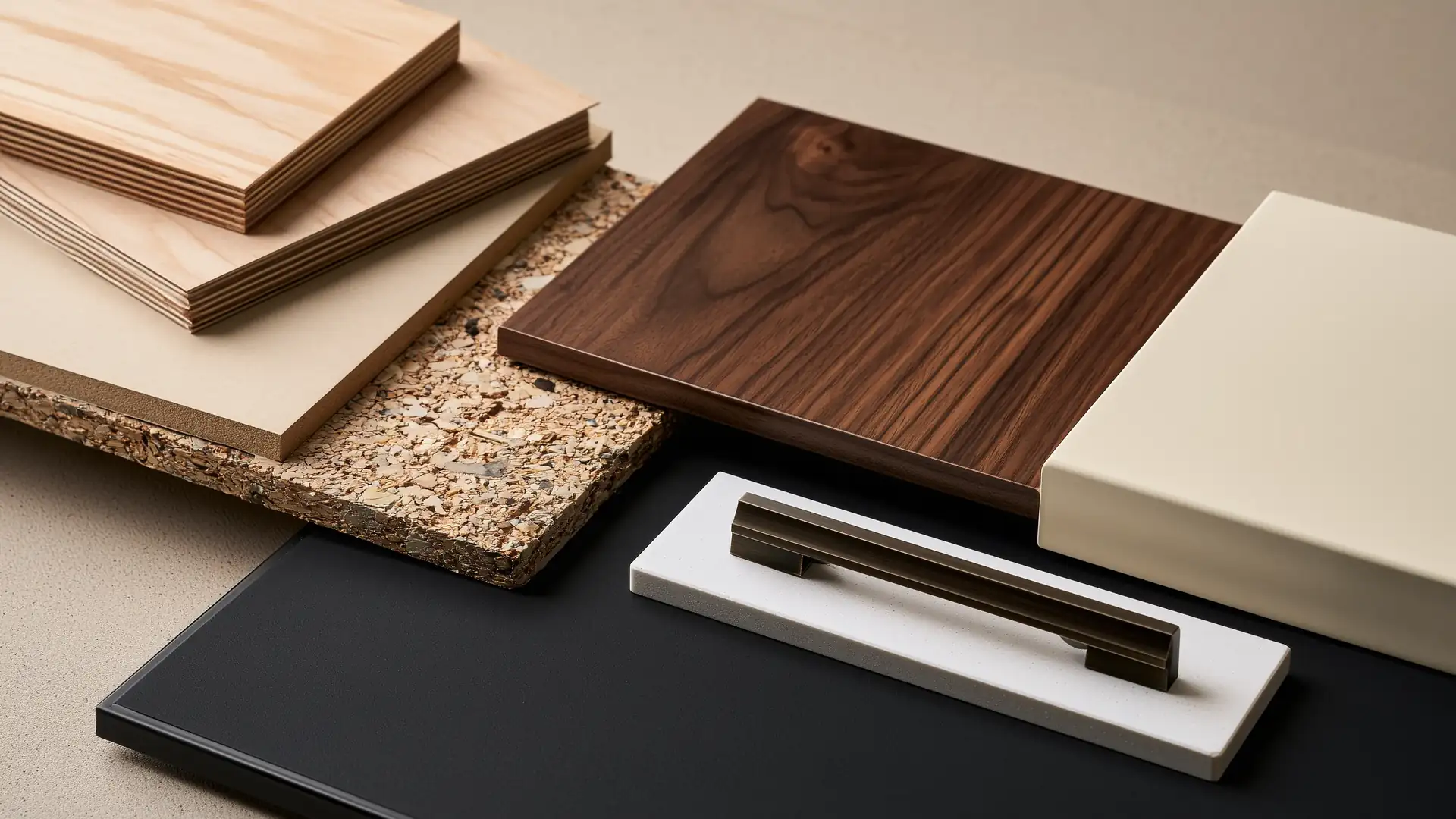
Cabinet Material: Particle Board, MDF or Plywood
Where each cabinet material lasts, what it adds to your cabinet price and what to know.
| Material | Where it suits | Cabinet price | What to know |
|---|---|---|---|
| Particle board | A closet, upper cabinets or another dry spot | Lowest | Its melamine face wipes clean. Most failures come from raw, unsealed edges that let water in; sealed and kept dry, it lasts. |
| MDF | A kitchen away from the sink | About 6% more than particle board | It is flat and smooth and holds screws better than particle board. It still swells when water soaks its edges. |
| Plywood | A sink base, bathroom vanity or laundry room | About 12% more than particle board | It holds screws best and tolerates moisture better than particle board or MDF. Its exposed edges still need sealing against water. |

Why How a Cabinet Is Built Matters as Much as the Board
A plywood cabinet is not automatically a better cabinet. How it is built and installed decides how long it lasts.

- Sealed edges. Water gets into any board through raw edges and plumbing cut-outs. Sealing them protects a cabinet more than the board name alone.
- Hinges and drawer slides. Good hardware keeps doors lined up and drawers running smoothly through years of daily use.
- Shelf support. A shelf needs the right thickness and support for its load, or it sags.
- Correct installation. A level, secure cabinet keeps its doors in line and stays fixed to the wall.
Ask your cabinet maker how it seals edges, which hinges and slides it uses and how it fastens cabinets to the wall.
Compare hinges, drawer slides, handles and organizers in the cabinet accessories guide.
Which Material Makes Sense for Your Room and Budget?
A practical starting point for each use.
| Application | Practical starting point |
|---|---|
| Dry bedroom closet | Particle board or MDF |
| Painted doors | MDF, because it paints smooth with no grain showing through |
| Cabinet under a sink | Plywood with sealed edges |
| Pantry shelves for cans and appliances | Plywood |
| Busy kitchen counter | Quartz for no sealing, granite or porcelain if you put hot pans down |
These are starting points. The best choice depends on where the cabinet goes, how much weight it holds, how often it gets wet and what you want to spend.
What Materials Work Best for Bathroom Vanities?
No wood-based vanity is waterproof. Plywood with sealed edges handles daily splashes; a leak still needs fixing fast.
Learn more about custom bathroom vanities.
Cabinet Doors: Laminate, Painted or Wood Veneer
How each door finish looks and wears, and how it changes your cabinet price.
| Door finish | Cabinet price | What to know |
|---|---|---|
| Laminate | About 15% less than painted | Wipes clean and resists chips and moisture. A damaged door is replaced, not repaired. |
| Painted | The middle price | Smooth, even colour on MDF. A chip can be touched up. |
| Wood veneer | About 15% more than painted | Real wood grain on a stable panel that resists warping. |
Your cabinet maker tells you which materials and finishes are available for your design.
How to Choose a Cabinet Colour
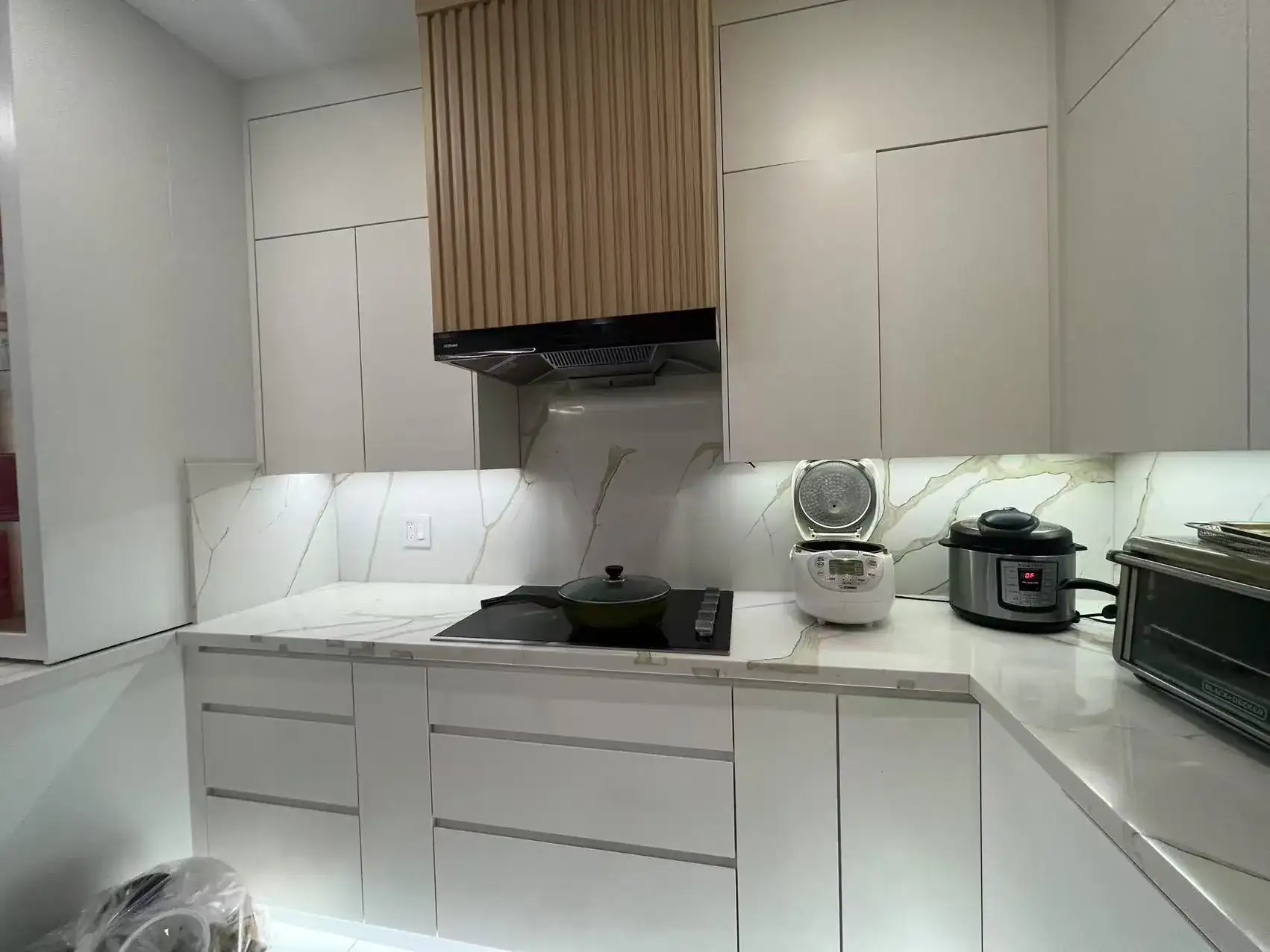
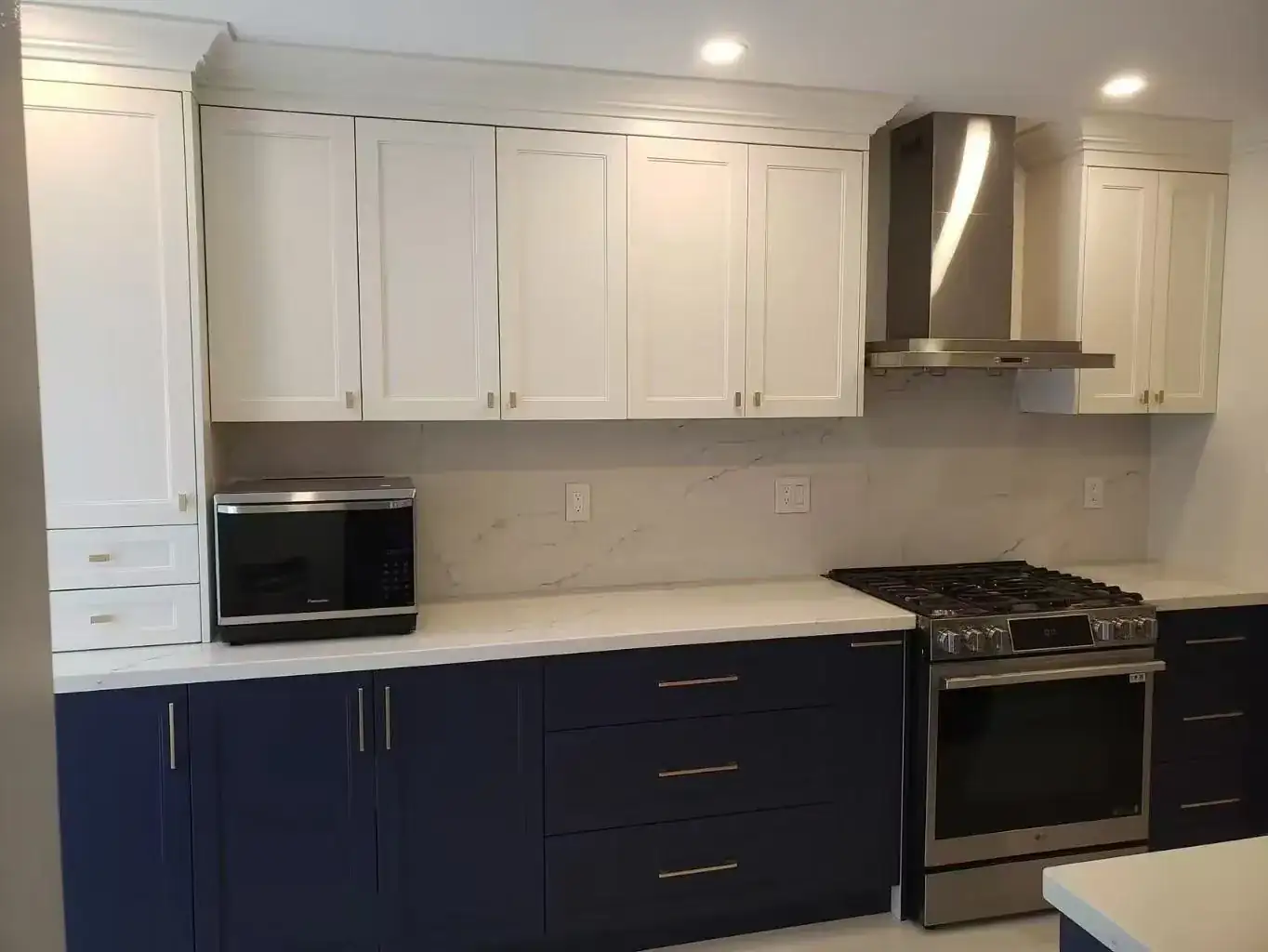
- White can look stark against black appliances. A mid-tone counter or wood accent softens the contrast.
- Dark cabinets make a small or north-facing kitchen feel smaller.
- Wood tones too close to your floor blend into it. Pick a shade clearly lighter or darker than the floor.
Look at a full-size door sample in your own kitchen light before you choose. A colour that suits the showroom can look different at home.
Countertops: Quartz, Granite, Porcelain, Laminate, Marble or Quartzite
How each countertop wears and what it needs.
| Countertop | Where it suits | What to know |
|---|---|---|
| Quartz | A busy kitchen, condo kitchen or bathroom | Needs no sealing and resists most everyday stains, though it isn't stain-proof. A hot pan can scorch its resin, so use a trivet. A plain, light pattern can look flat next to stone, so choose from full slabs. |
| Granite | A family kitchen where you cook often | Handles heat well, but use a trivet for hot pans. Needs sealing about once a year to resist stains. Each slab looks different. |
| Porcelain | A modern kitchen, a waterfall island or a counter in strong sun | Takes heat, resists stains and keeps its colour in sunlight. Thin slabs can wrap an island or form a sink. A hard knock on an edge can chip it. |
| Laminate | A laundry room, basement suite or tight budget | Costs least. A hot pan or knife marks it, and water left on a seam swells the board under it. It takes a drop-in sink, not an undermount sink. |
| Marble | A baking station or a main bathroom vanity | Natural veining and a cool surface for rolling dough. It is softer than granite, so it scratches. Lemon juice and vinegar etch dull spots in it. Needs sealing to resist stains. |
| Quartzite | An accent island or a kitchen where you want natural stone | Natural veining. It resists scratches better than granite and resists lemon juice better than marble. Needs sealing to resist stains, most of all near cut edges. Some slabs sold as quartzite are softer, so ask to test a sample. |
Quartz suits most kitchens because it needs no sealing. Granite or porcelain suits a cook who wants a counter that handles heat. Marble suits a baker who accepts etching. Quartzite suits a natural stone look that resists scratches, if you accept sealing.
You can compare each countertop's samples at your cabinet maker's showroom. See countertop prices.
Frequently Asked Questions
Is particle board bad for cabinets?
Not in a dry spot. Particle board with sealed edges lasts in a closet or upper cabinet. MDF costs a little more and holds screws better. Under a sink or in a bathroom, choose plywood.
Should I paint my wood cabinets?
Only when the boxes are solid and you pay for a factory-style finish. Paint brushed on at home often chips within a couple of years. Taking the doors to a shop to spray them lasts, but it can cost nearly as much as new cabinets. See whether to paint, reface or replace.
Is quartz better than granite?
For stains and upkeep, yes. Quartz needs no sealing and resists stains better. Granite takes heat better and needs sealing about once a year. Both last for decades in a kitchen.
Choose Materials for Your Project
See how your materials change the price in the kitchen estimator. Switch the cabinet material, door finish or countertop and compare the totals.
Then book a free home visit. Your cabinet maker measures your room, and you see door and countertop samples at the showroom.